
Pixel Pond
Expertly matching new and established talent with businesses in the digital space
From small start-ups to global enterprises, finding the right people to help grow a business is not always an easy task. Increasingly companies prioritise the ‘company-fit’ of new employees which is essential for growth and future success. As a recruitment company specialising in Product, UX, UI & Technology, Pixel Pond have refined their expertise to match new and established talent with leading agencies, tech firms and start-ups.
The Challenge
With over 180 steps to complete in the recruitment process, from submitting a job vacancy to hiring the perfect candidate, the opportunity for error is statistically high.
With an initial understanding of existing pain points, Pixel Pond wanted to create a client portal that would allow clients to track the recruitment process of any open job position being filled. We were tasked with conducting user research to uncover key problems for both client and recruiter before validating this solution, then designing a product that would facilitate trust between both parties, and provide a personal service whilst retaining the ‘human’ element to recruitment.
My role
I was part of a UX design team that undertook shared responsibilities during the research stage, before individually implementing these findings to design a solution.
The process
Based on the challenge and the time-frame we had to deliver, we used the double-diamond framework when approaching the project.
Duration: 2 weeks
Tools used
User research, interviews, competitor analysis, task analysis, archetypes, problem statement, wireframing, digitising, user testing.

Uncovering the problem
Discover
Stakeholder meeting
Who are Pixel Pond?
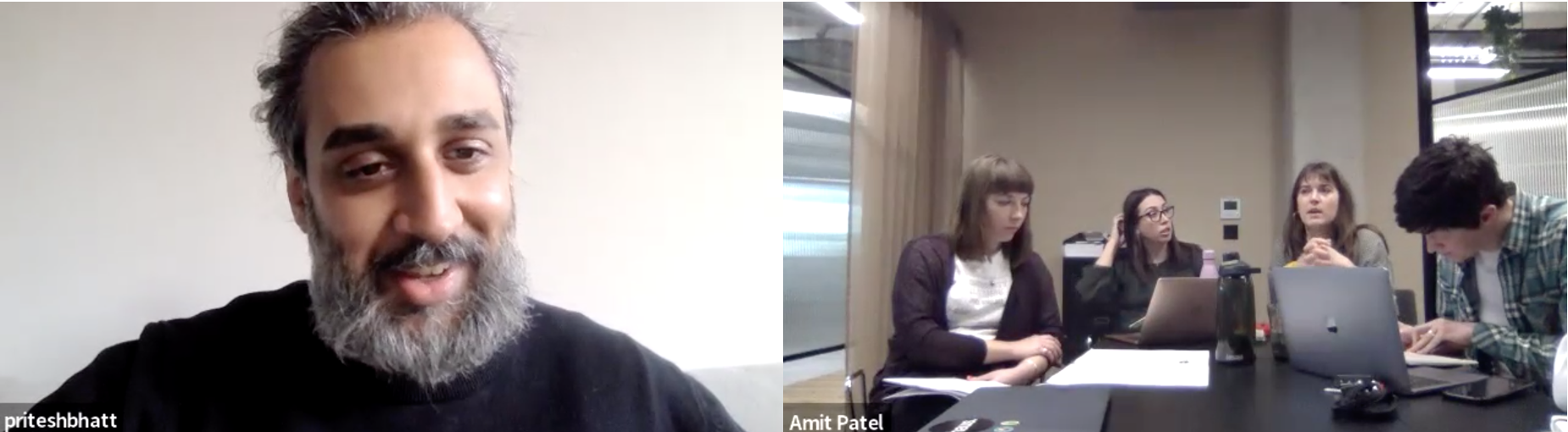
To get things started, we needed to speak to the stakeholder to get a better understanding of who Pixel Pond were, their business objectives, and company values.
Importantly, we needed to uncover what problems recruiters faced on a daily basis. Whilst our brief had given us a pre-determined idea of what product they wanted, it was important that we first understood what the main paint points were for Pixel Pond employees and discover any problems that had not yet been considered.
“My heart has always been in helping clients scale”
Pixel Pond pride themselves on their…
Customer-focus
take time to understand their clients’ businesses and have an invested interested in helping them grow
Communication
important for building trust that forms the foundation for a strong partnership
Integrity
keeping clients up-to-date with open and honest advice
…but what’s slowing them down
Time-consuming updates
organising and delivering client briefs (every other day) and following-up clients they haven’t managed to contact
Juggling various platforms
using a variety of client portals & platforms; this is not only confusing and disorganised but takes control out of recruiters’ hands
Unrealistic expectations
clients may expect to receive 10 possible candidates within a week; they have to be reassured that recruiters are prioritising quality over quantity

Interviews
Who are Pixel Pond’s potential clients?
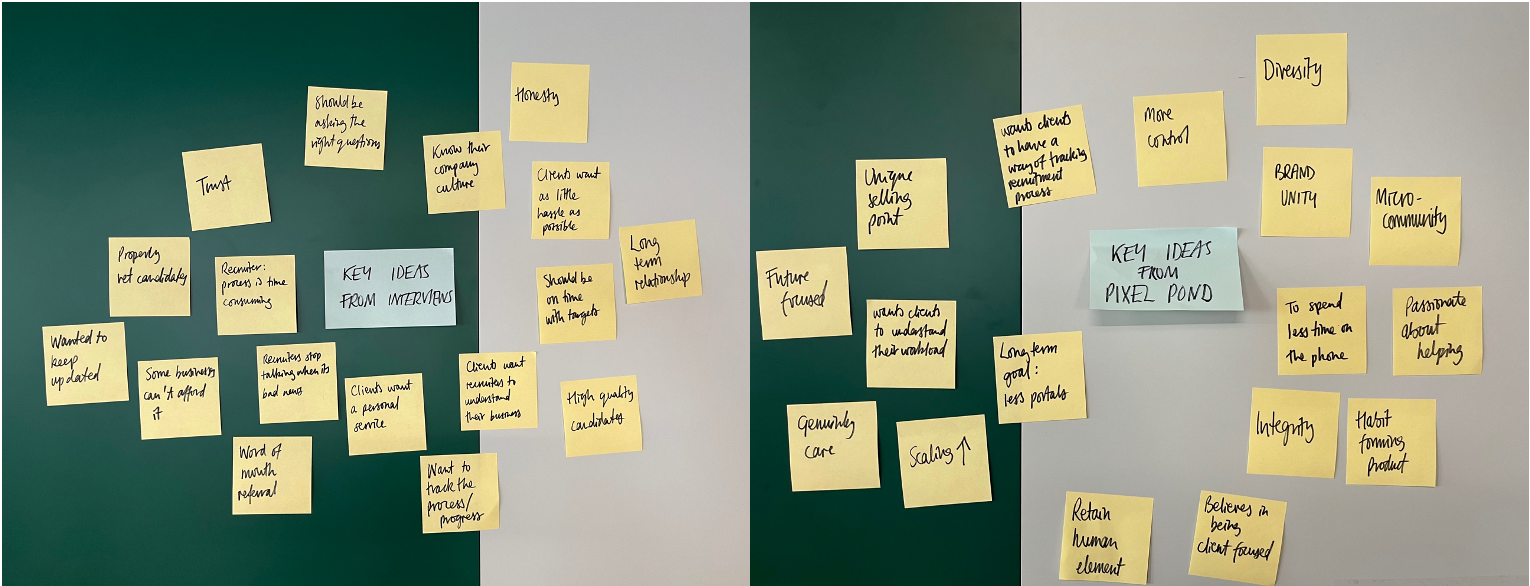
Now that we’d got a good understanding of the problems facing recruiters , we needed to hear from the client’s side. This was important as we didn’t want to define existing client pain points based on assumptions made from our stakeholder meeting. We wanted to discover how people go about filling a new job vacancy, what they look for in a recruiter, and how they felt about their experience with recruiters.
We conducted 14 interviews with people who currently use recruiters or have had experience with recruiters in the past
What did they say?
“It’s a willingness to invest in building a long-term relationship”
Personalised service
they want to feel like their recruiter has spent the time to understand their business, so they have a genuine invested interest in helping their business grow and thrive
Efficience service
they want to be kept in the loop on where they are in the process, so they can report back to teams internally
Left in the unknown
however they can’t control when they receive progress updates; recruiters either go silent when its bad news, or inundate clients with reports which can be overwhelming
In-depth Competitor Analysis
Who are Pixel Pond’s competitors?
With a deeper understanding of the key objectives and problems and for both recruiter and client in the recruitment process, the next step was to understand Pixel Pond’s competition. We needed to research what competitors were out there and to analyse their strengths and weaknesses. We decided to focus on both direct competitors (alternative platforms that recruiters use) and indirect competitors (services that allow users to track their process).
Direct Competitors

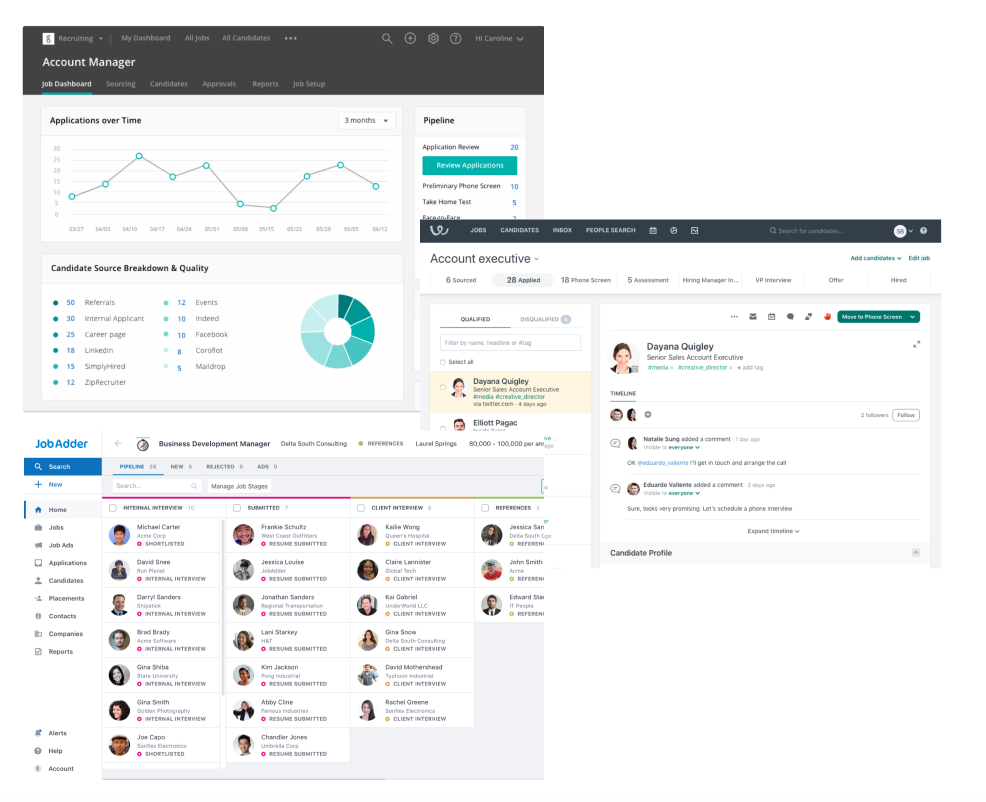
Whilst many of these platforms were functional and some had a good system for organising and tracking job vacancies, they were all for internal recruitment use meaning clients still had to rely on updates directly from their account managers
Indirect Competitors

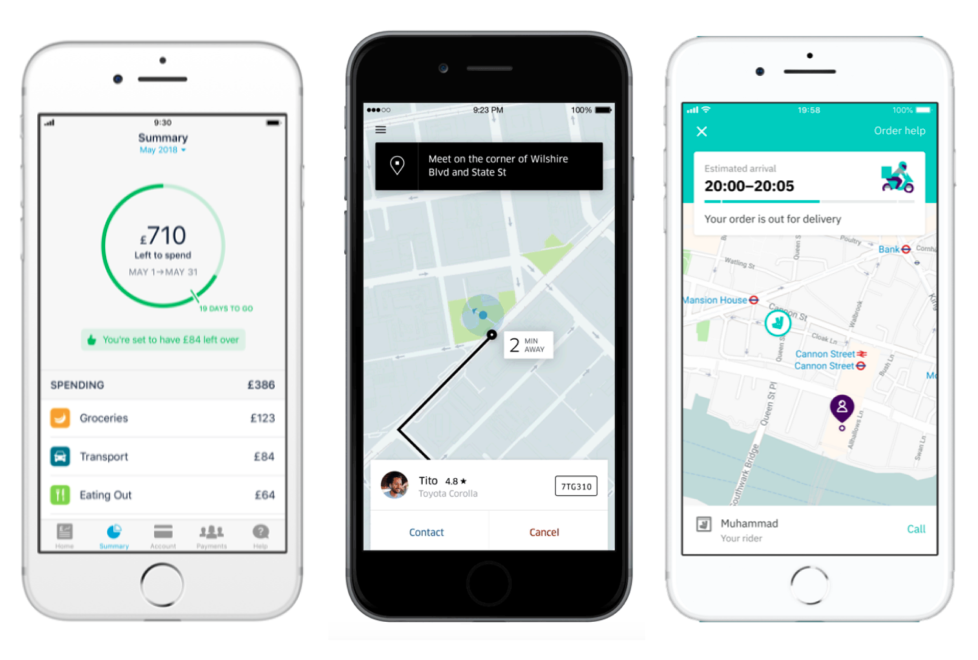
With a key issue being the need for clients to track the recruitment process, we wanted to look at how services provide that ‘hand-holding’ experience for customers.
These apps allowed users to track their progress, i.e. a food delivery or keeping tabs on spending habits, in a clear and visual way, with frequent updates and set end goal.
Redefining the problem
Define
Task Analysis
Returning to the recruitment process
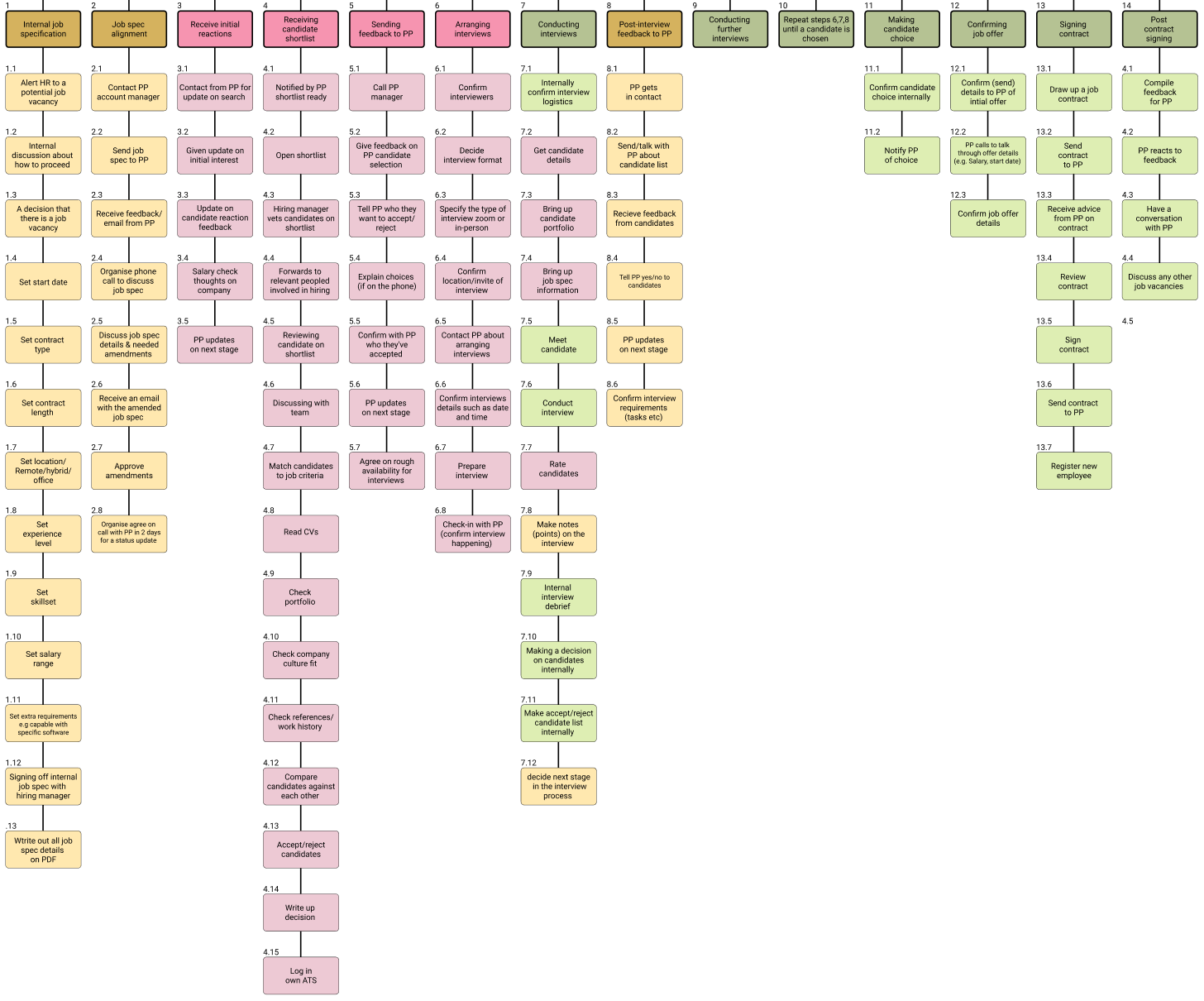
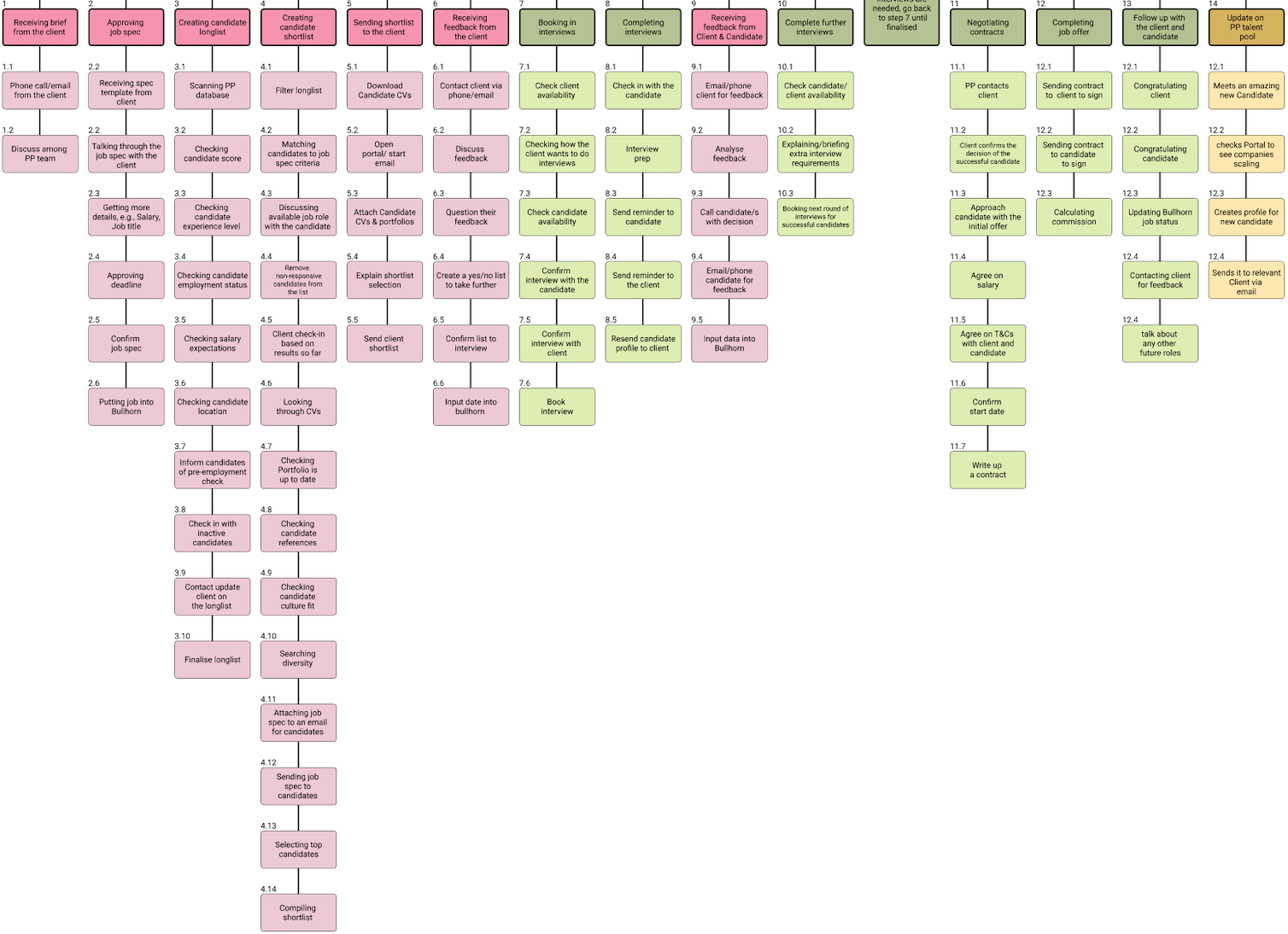
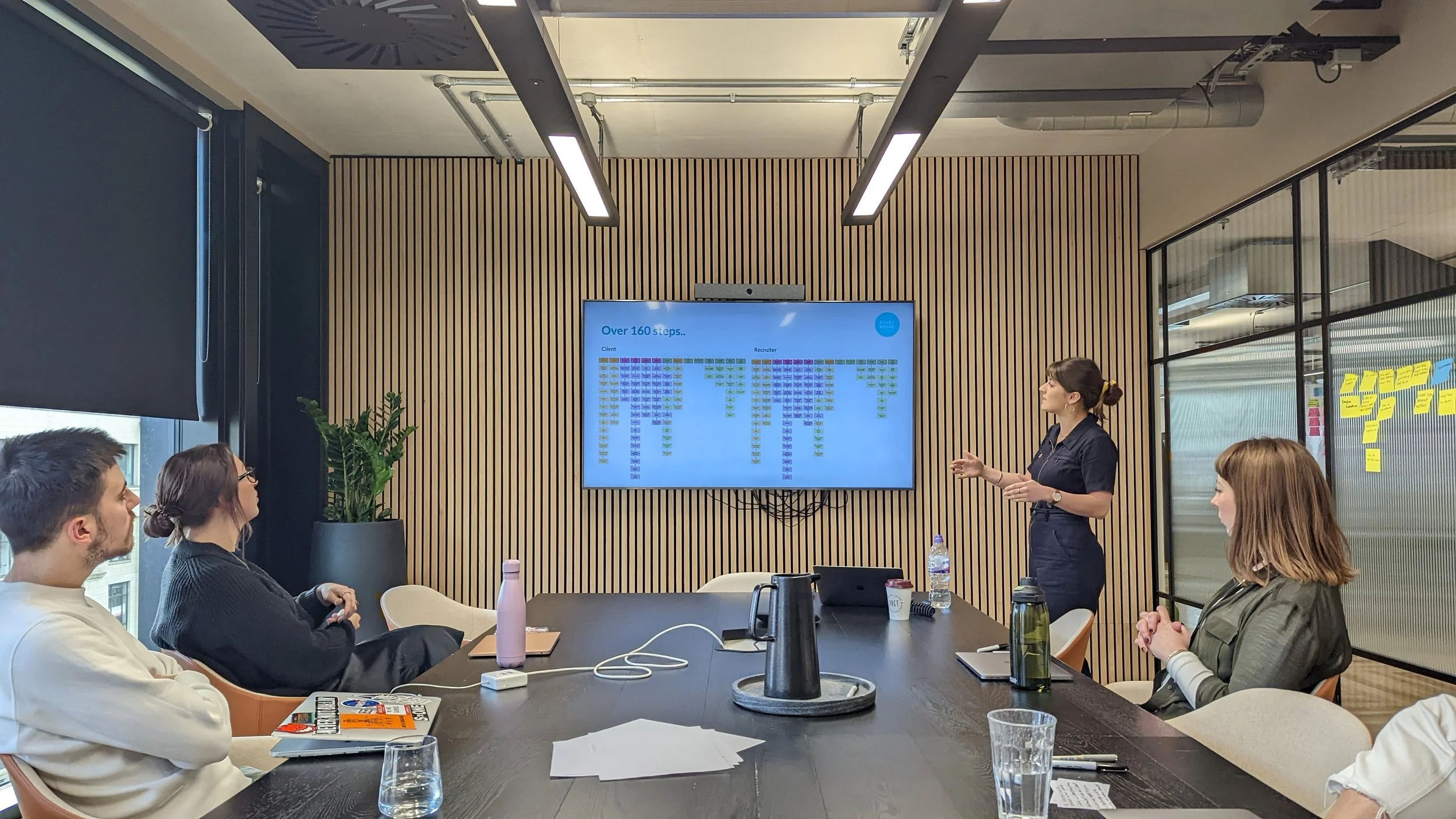
In order to maximise the value of the product we delivered, we wanted to understand exactly where in the recruitment process things were most likely to go wrong. This would ultimately identify the key problem stages and highlight areas which we could focus on for improvement. We did a detailed breakdown of the recruitment process, from beginning to end, into individual steps and highlighted where the interaction between recruiter and client would take place. We found there were over 180 individual steps…
Client
Recruiter
What did this tell us?
We found that interactions between recruiter and client was highest at the start of the process. This involved a lot of information gathering and exchanging, which was not only time-consuming but was essential to get right to reduce inefficiencies down the line. There was a lot of back-and-forth communication to inform clients of what steps recruiters were taking and what actions they might need to take. There was also a lot of feedback being given by the client to their recruiter from the start, to ensure the service being provided was personalised and tailored to each specific client.
Pulling this all together
With a concrete understanding of what were the key problems and when they were arising in the process, it was clear our focus should be at the beginning of the process. Pixel Pond needed a way of achieving 3 key aims…
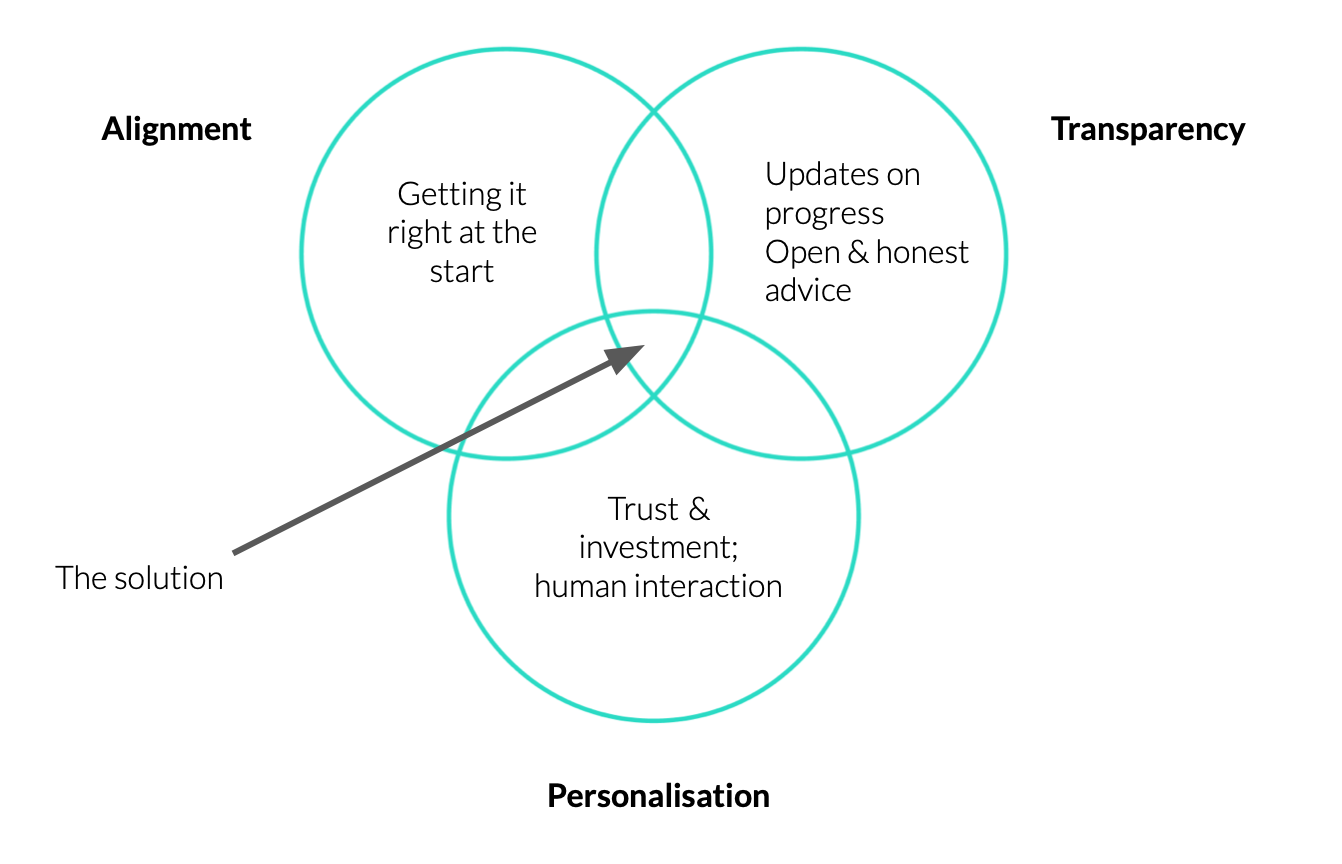
By finding a solution that would integrate these three aims, Pixel Pond recruiters would spend less time having to chase clients for information or process reports, instead spending time to deepen their understanding of clients’ businesses and finding the right candidates to help them grow. In turn, clients would feel more in control of progress being made and that the service being provided was personal, trustworthy, and tailored to their needs.
Problem Statement
What does Pixel Pond need?
Pixel Pond needs a client-facing platform that is personalised and process-driven because efficient, timely and transparent communication is key to building future-focused client partnerships.
What core tasks did this portal need to achieve?
Add a new job vacancy
Provide all the correct information when submitting a new job vacancy right at the start
Track progress
See where they are in the process and any tasks that need to be completed
Give feedback
Opportunity to give feedback at every stage of the process

Ideating a solution
Develop
Wire framing
Sketches
I started by creating high-level sketches of the new portal and how the user flow would look for both client and recruiter and their interaction together; as we had discovered, the steps client and recruiters had to complete were so highly integrated that ensuring they worked together was integral to the efficiency of the process.
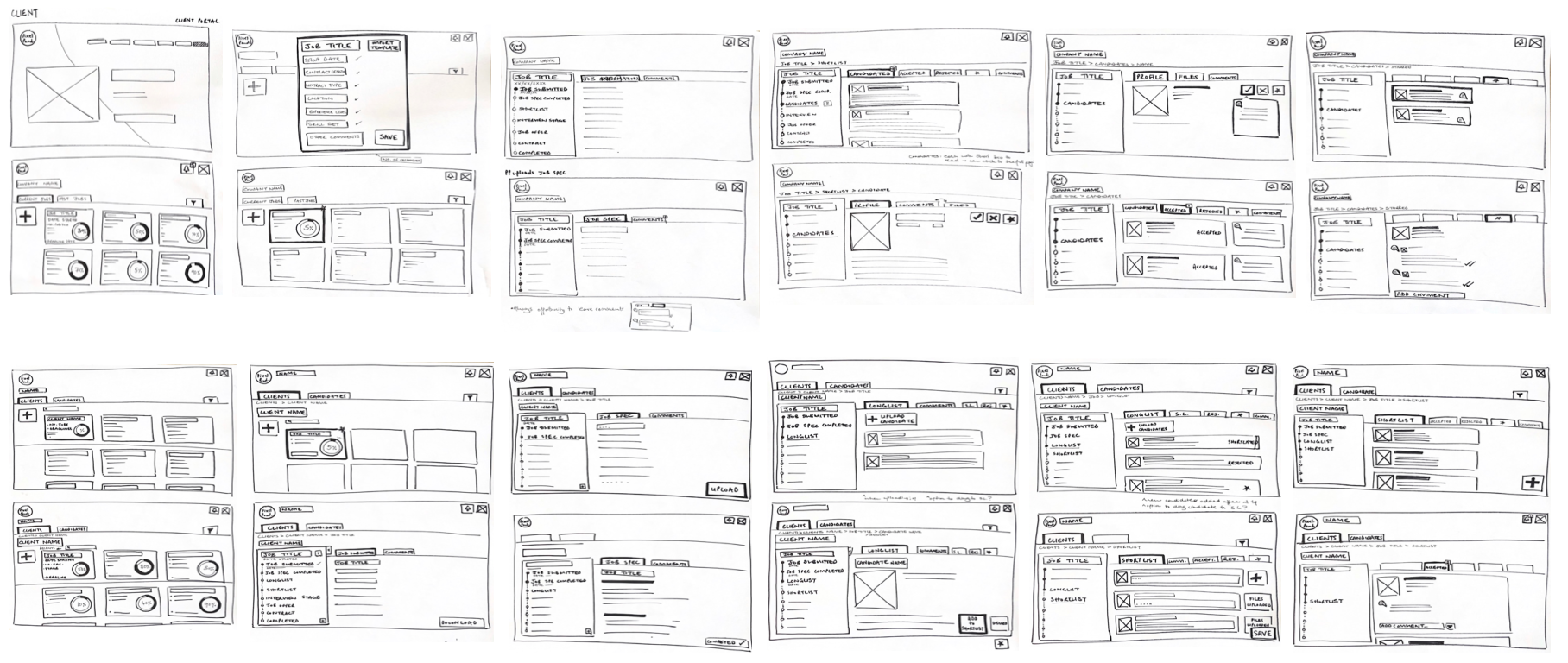
Due to time restraints, I knew I would not be able to develop both the client and the recruiter’s side of the portal. Therefore, I decided to focus on designing the client-facing side as this was going to be the portal’s unique selling point.
I wanted to sketch out in detail what the client’s homepage would look like, how they would add a new client, and move candidates through the process.

Making it digital
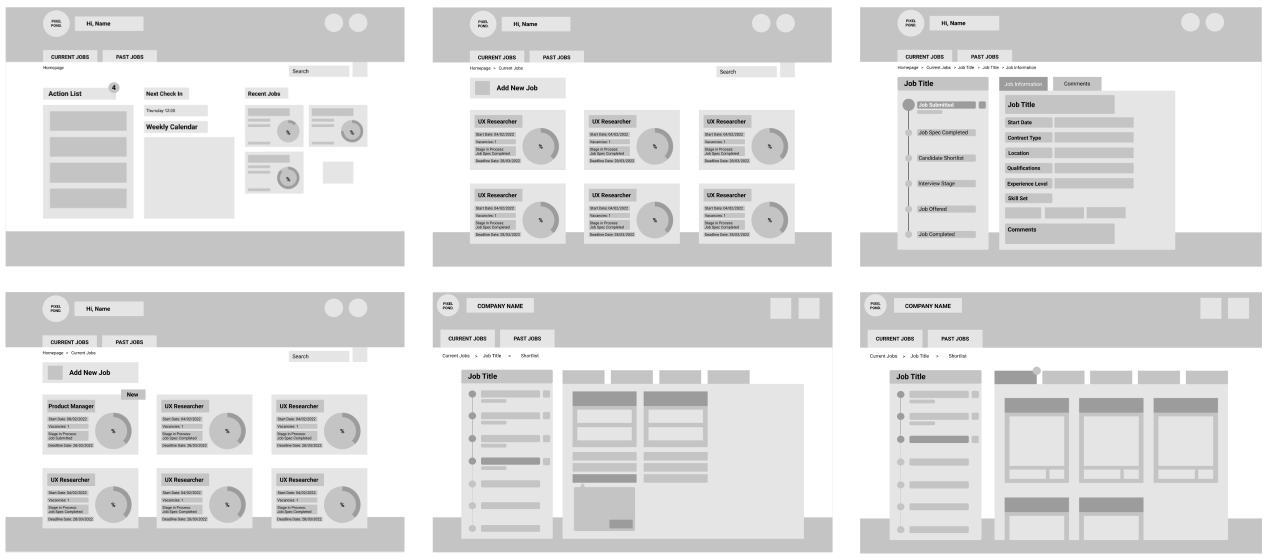
User Testing
Again, due to time restraints I was only able to carry out very limited user testing. As a result of the testing I did manage, I made various changes to the home landing page, job spec layout and comment boxes.
Presenting the solution
Deliver
Stakeholder Presentation
Having made these final changes, the high fidelity prototype was ready to present back to the stakeholder at Pixel Pond.
Alignment
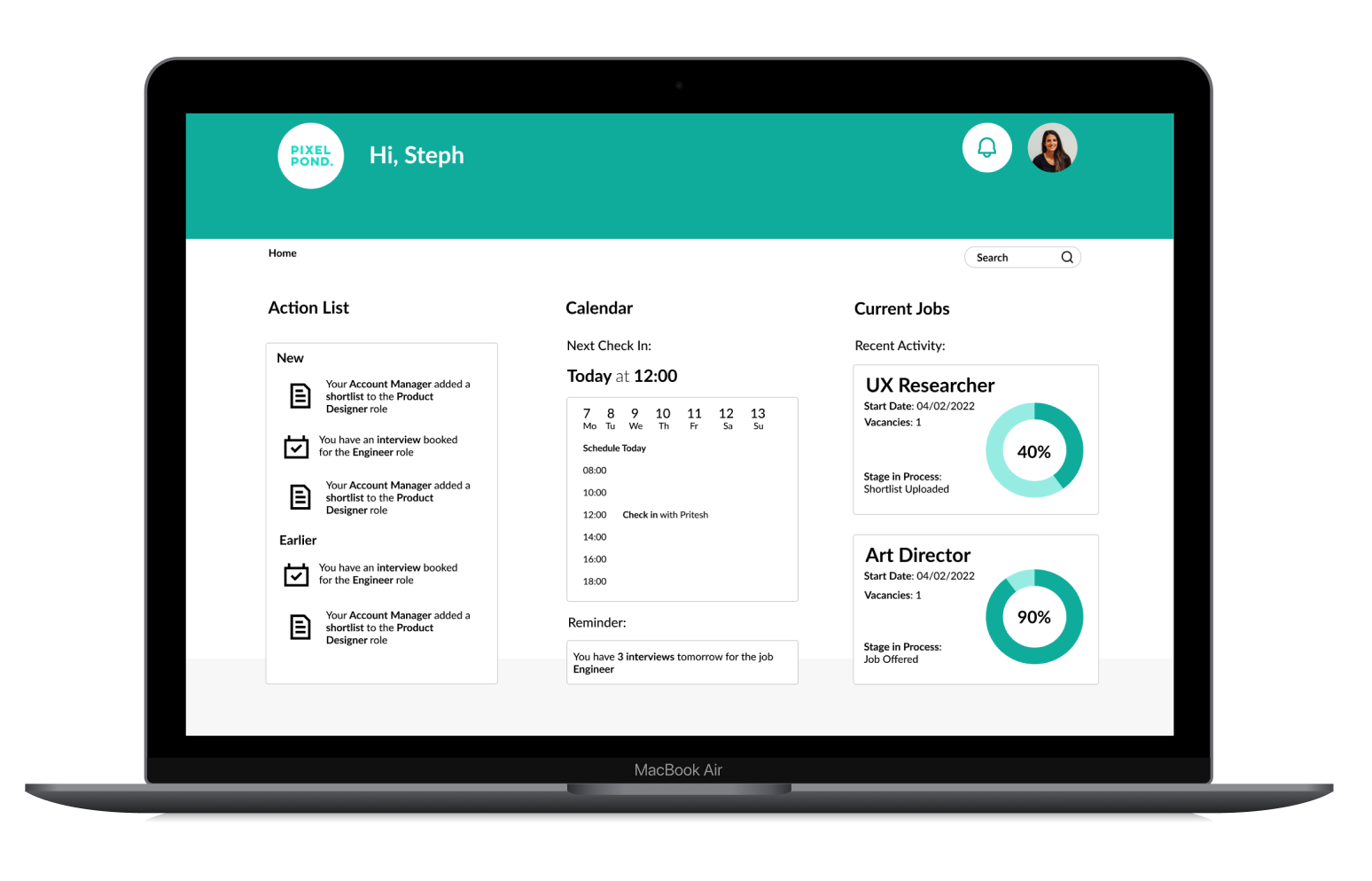
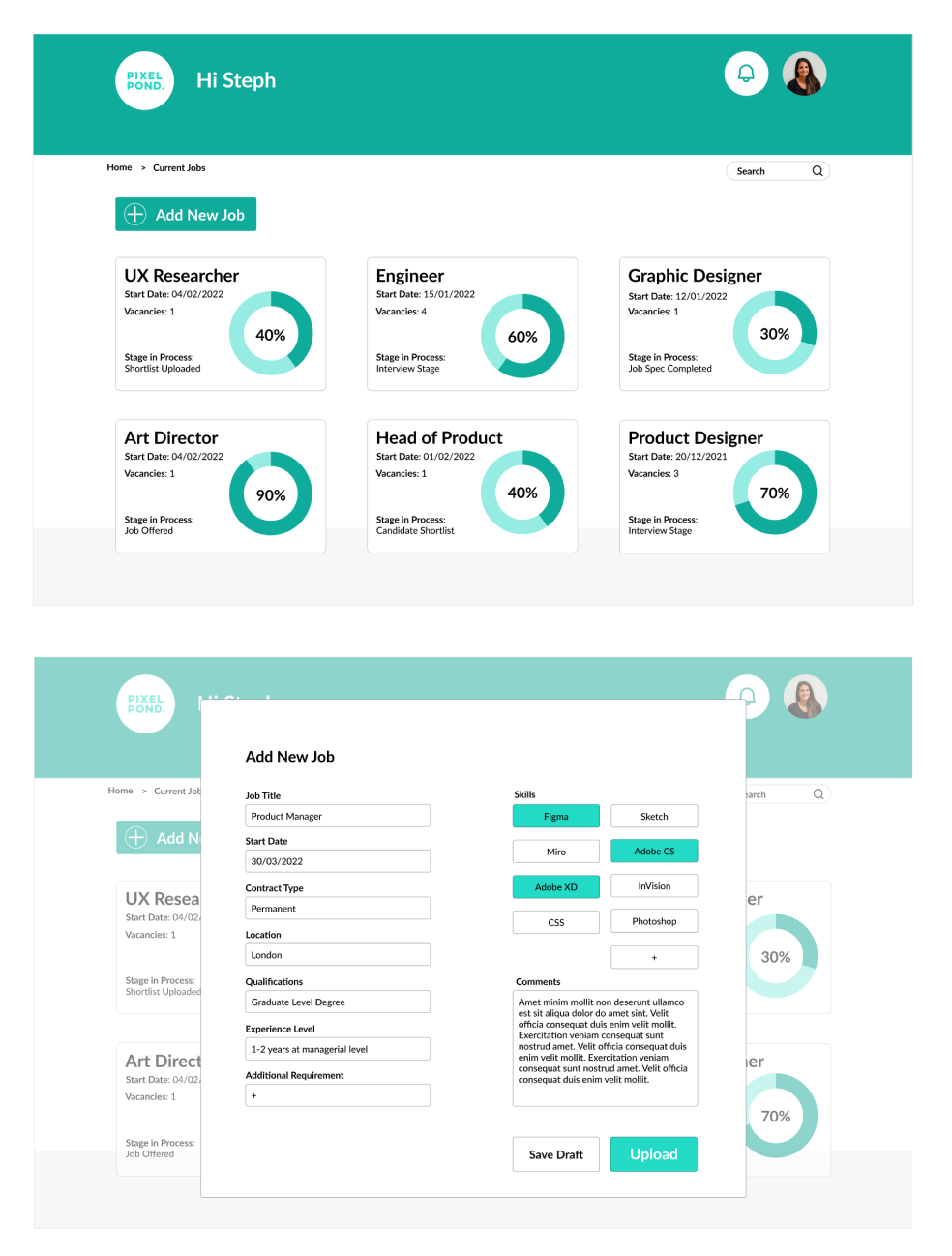
Users can see all their current job vacancies in one place, at a quick glance see how they’ve got to complete the process for each and add a new job role easily.
Having the option to import in-built templates for specific roles makes the process of creating a new job role more efficient whilst ensuring clients have provided all the necessary information at the start. Pixel Pond recruiters no longer have to invest time chasing clients for vital information.
Transparency
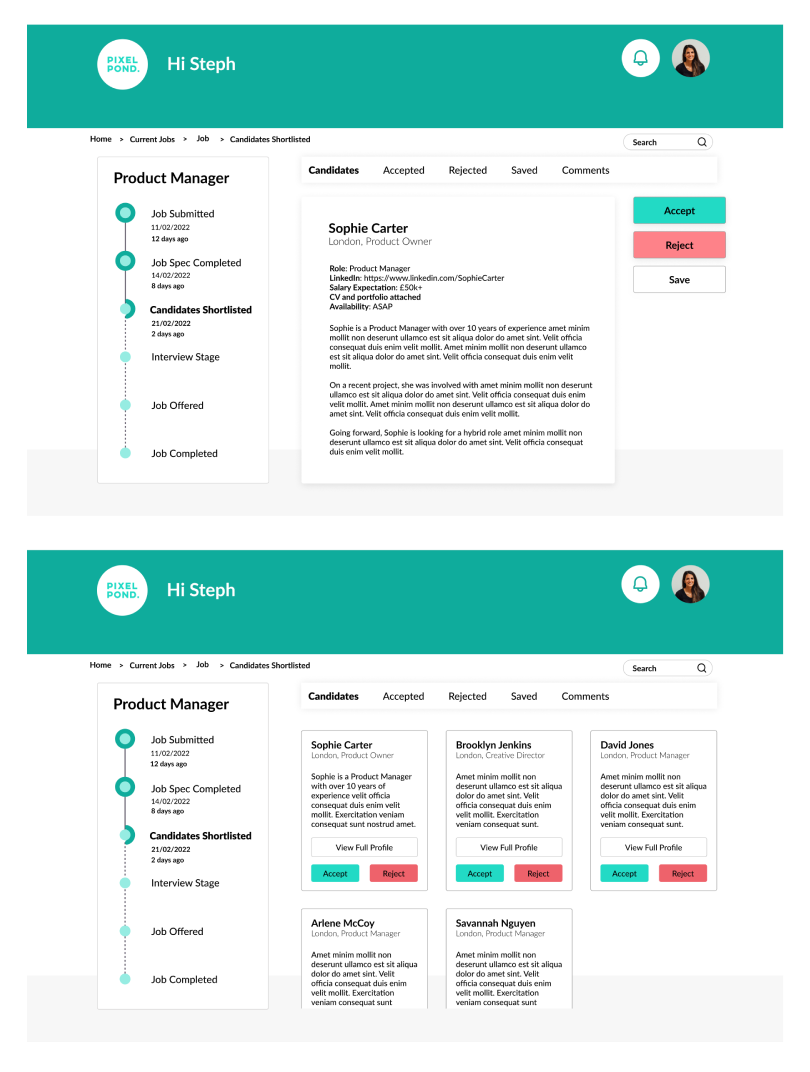
Once a new job has been submitted, the progress tracker bar allows clients to straight away see where they are in the process. They no longer have to wait for briefing updates from their account manager to see how much progress that’s been made.
Stage can appear incomplete, highlighting that steps still need to be taken to complete that state, replicating the sense of ‘hand-holding’ clients through the process.
Personalisation
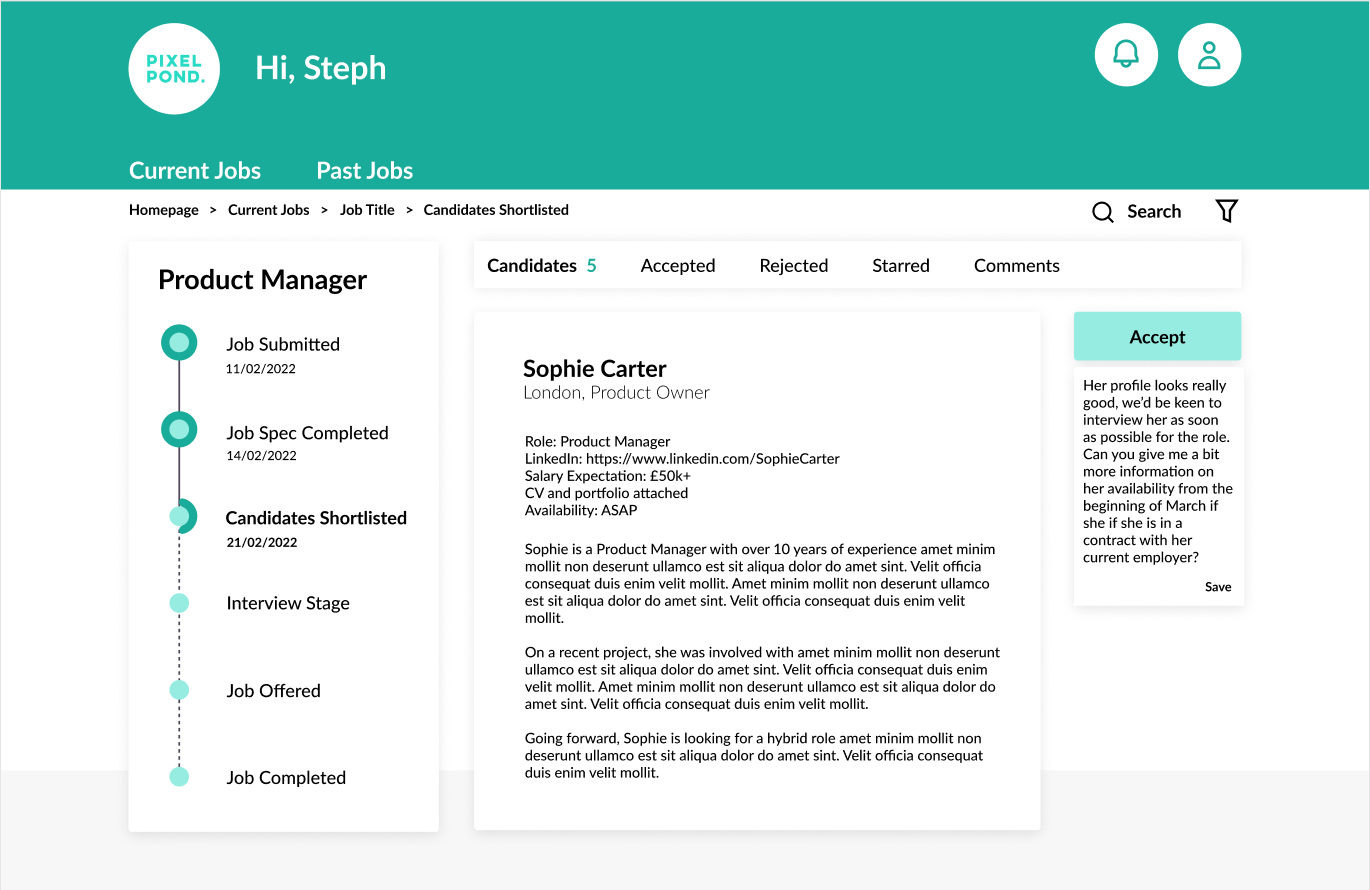
At every step of the recruitment process it’s necessary for clients to feel like they can ask questions or make an issues heard.
This is why they have the opportunity to leave feedback or make additional comments when competing each step so that the service can be tailored to fit their specific needs.
Feedback
What Pixel Pond thought
I presented the final product to the client as well as the research and process I had undertaken in the 10-day sprint. The feedback I got was overwhelmingly positive and they were particularly impressed with the level of detail that had gone in to the research stage and how it informed the final designs.
Roadmap
The Next Steps
Integrating recruiter-side
Keep developing the client portal whilst integrating it with Pixel Pond’s side of the portal so that their tasks are integrated in a way that will maximise efficiency.
Chat function
In order to remind clients that they’re getting a personalised service, I thought it was important that there was a way they provide could receive more instant support.
Upcoming talent
Expanding this out to include a function that pre-empts client's potential job vacancies, giving suggestions of candidates that would be a good company-fit is for those scaling.